 한국어
한국어 日本語
日本語 English
 简体中文
简体中文
Acne Scars and Pores in Gangnam: Why Do Treatments Differ? How BLOOM scar needle Works and Treatment Options
Acne scar treatment varies depending on scar type, depth, and tethering. Dr. Lee Ji-seung of Medical Bloom Korean Medicine Clinic · COEX explains how BLOOM scar needle works, the roles of POTENZA and skin boosters, the expected number of sessions, and considerations for recovery.
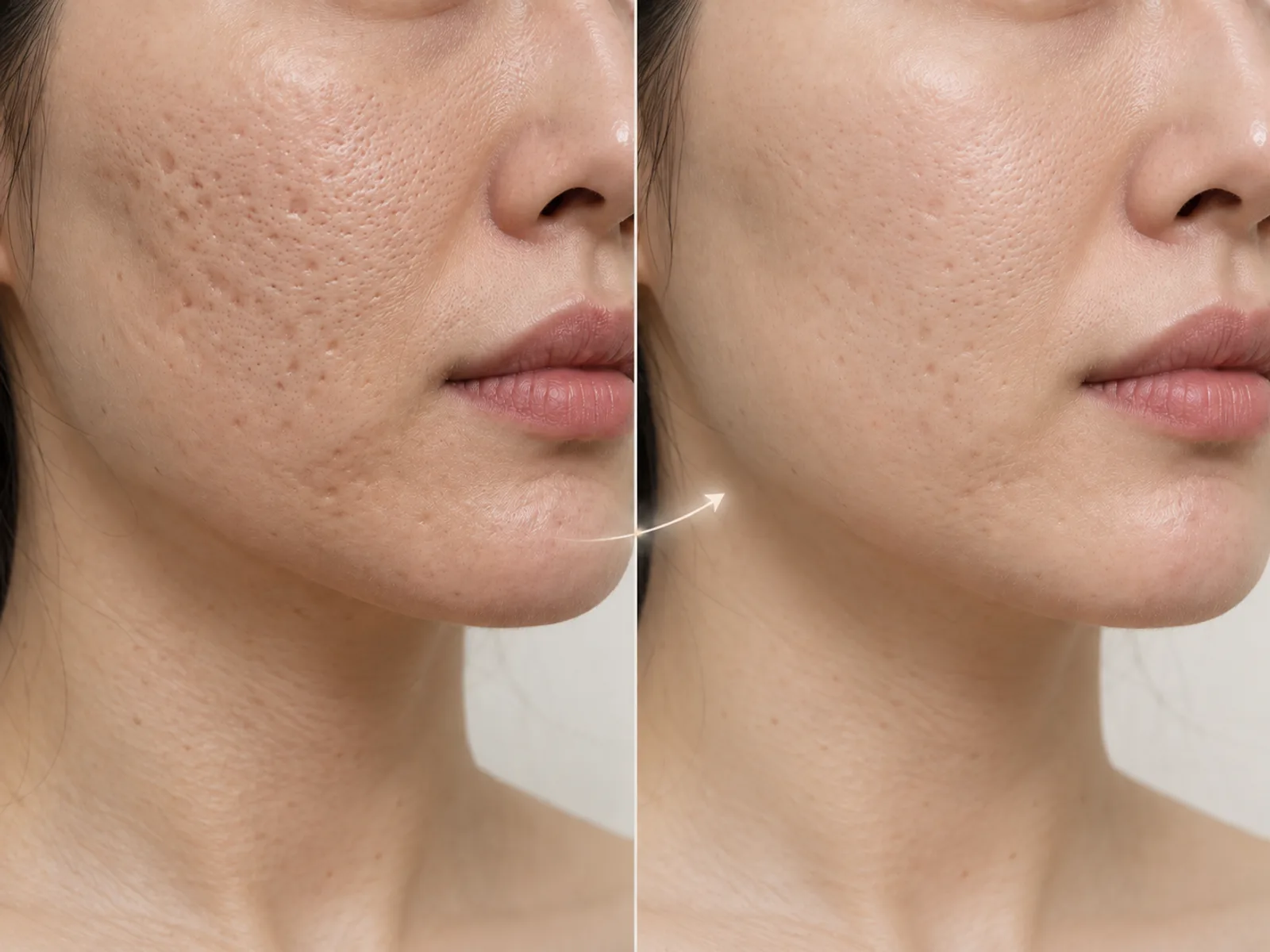
Summary: Acne scars are broadly divided into depressed and raised scars. Depressed scars include ice pick, boxcar, and rolling scars, and treatment varies depending on depth, tethering, and skin condition. BLOOM scar needle at Medical Bloom Korean Medicine clinic uses fine needles to individually release the tissue tethered beneath scars. During consultations, we may plan 1–2 sessions for relatively simple scars, approximately 5 sessions for typical scars, and 10 or more sessions for deep, longstanding scars. The actual number is adjusted according to treatment progress.
Written by: Lee Ji-seung, Medical Director (Korean Medicine Doctor, PhD in Eastern and Western Medicine) · Date: 2026.10.8
Hello, I’m Dr. Lee Ji-seung, Medical Director of Medical Bloom Korean Medicine Clinic · COEX.
A question I often hear during acne scar consultations is, "Can these scars improve, too?" Before answering, I examine the shape and depth of the scars and the degree of tethering beneath the skin. Depressed scars that look similar on the surface may require different treatment approaches.
Many patients visit Medical Bloom Korean Medicine clinic with concerns about acne and scarring. During an examination, I focus not only on the name of the scar type, but also on the structure of each depression and what needs to be improved.
In this article, I’ll explain the types of acne scars, treatment approaches for each type, the components of the BLOOM scar needle program, and the criteria we use to determine the number of sessions.
How Are Acne Scars Different from Acne Marks?
The traces left after acne subsides can broadly be divided into changes in color and changes in the skin’s surface.
Acne marks are changes in color without a depression or elevation in the skin. Red marks may be post-inflammatory erythema, while brown marks may be post-inflammatory hyperpigmentation. They sometimes fade over time, but they can also persist.
Acne scars are depressions or raised areas that develop as skin tissue is damaged and heals. Loss of collagen can lead to depressed scars, while excessive collagen buildup can cause raised scars. Depressed scars are unlikely to fade on their own in the same way as marks that involve color alone.
If lighting from the side makes shadows in depressed areas more noticeable, this may suggest scarring. However, lighting alone cannot reliably distinguish the two. Depressed scars and red or brown marks can also coexist in the same area.
Three Types of Depressed Acne Scars
Depressed acne scars are commonly classified as ice pick, boxcar, or rolling scars. Each type differs in shape, depth, and the condition of the tissue beneath the skin.
- Ice pick scars — These have a narrow opening and extend deeply, as though the skin has been punctured with an ice pick. We assess the depth beneath the opening and whether each scar needs targeted treatment.
- Box-shaped or boxcar scars — These are round or oval depressions with clearly defined edges. We examine the depth of the scar’s base, the shape of its edges, and whether tethering is present.
- Rolling scars — These are broad, wave-like depressions with gently sloping edges. We check for fibrous tissue beneath the skin that may be tethering the scar downward.
This classification is a starting point for treatment planning. Several types may coexist on one face, so we do not select a treatment based on the scar type alone.
For example, if rolling scars are spread across the cheeks and deep boxcar scars are present on the temples, the treatment plan may differ between the two areas.
Ice Pick Scars: Assessing the Depth Beneath a Narrow Opening
Ice pick scars can extend deeply relative to their visible opening. Treatment over a broad area alone may not produce sufficient change, so we assess whether individual scars need a targeted approach.
Boxcar Scars: Considering Both Depth and Edges
Even within the boxcar category, shallow and deep scars require different approaches. We consider not only the level of the depressed base, but also the edges where it meets the surrounding skin and whether tethering is present.
Rolling Scars: Checking for Tethering Beneath the Skin
With rolling scars, fibrous tissue beneath the skin can pull it downward, creating a wave-like surface. In these cases, we assess whether treatment to release the tethering is needed and whether to combine it with treatment for the surrounding skin texture.
Raised Acne Scars Require a Different Approach
Common types of raised scars include hypertrophic scars and keloids. These develop when excessive collagen builds up during wound healing, causing the scar to rise above the skin.
Hypertrophic scars generally remain within the original wound boundaries, while keloids can grow beyond them. They may occur along the jawline or on the chest, back, or shoulders.
Because depressed and raised scars involve different tissue changes, their treatment goals and methods also differ. Treatments intended for depressed scars are not applied to raised scars in the same way.
Please tell us during your consultation if you have previously developed a prominently raised scar or have been diagnosed with a keloid. We recommend dermatology care when needed.
Five Things I Check When Examining Scars
- Scar types and distribution — I check where ice pick, boxcar, and rolling scars are located and whether raised scars are also present.
- Depth and tethering — I examine how deep the scars are and which areas are being pulled downward by tissue beneath the skin.
- When the scars formed and previous treatments — I ask when the scars developed, which procedures you have received, what changed, and whether you experienced any uncomfortable reactions.
- Remaining acne and marks — I check for ongoing inflammation, red marks, and hyperpigmentation to determine treatment priorities.
- Skin characteristics and healing patterns — I consider skin thickness, susceptibility to hyperpigmentation, and how the skin recovered after previous procedures.
Using this information, I develop a treatment plan for each area and adjust it during the course of treatment by comparing the skin with its initial condition.
What Does the BLOOM scar needle Program Include?
BLOOM scar needle is the name of an individual procedure that uses fine needles to release tethered tissue beneath scars. The BLOOM scar needle program includes planning the treatment areas and whether to combine this needle procedure with treatments such as POTENZA, Face Contactor, and PN Rebuilder.
- BLOOM scar needle — This treatment uses fine needles to individually release the tissue tethered beneath scars. We assess the location and extent of tethering, depth, and shape of each scar.
- POTENZA — This treatment uses radiofrequency microneedling with the aim of improving scars, pores, and the surrounding skin texture. We assess individualized energy settings, treatment areas, and skin response.
- Face Contactor and PN Rebuilder — These skin boosters are selected according to the skin concerns to be addressed alongside scarring. We assess the skin’s condition, the purpose of combining treatments, and the appropriate product line for each person.
BLOOM scar needle: Addressing Tethering Beneath Individual Scars
BLOOM scar needle is Medical Bloom’s scar treatment that uses fine needles to individually release tissue tethered beneath scars. Its technique differs from conventional subcision, and each scar is approached individually after assessing its structure.
I examine which areas are being pulled downward and how the tethering relates to the depression. Even scars on the same cheek may require different treatment locations and coverage if their depth and tethering differ.
Before assigning a procedure uniformly to a particular scar type, I first determine whether each scar needs an approach that releases tethering.
POTENZA: Adjusting Energy Settings for Scars and Pores
Many people researching POTENZA ask, "How many shots will I receive?" Along with the shot count, it is important to understand which areas will be treated and which modes and energy settings will be used.
Drawing on our experience treating patients with acne and scarring, Medical Bloom Korean Medicine clinic plans the POTENZA component of the BLOOM scar needle program specifically for scar and pore treatment.
We use both Monopolar and Bipolar modes available on POTENZA and adjust energy parameters according to each person’s scars and pores. Energy parameters are settings that determine how energy is delivered, including the radiofrequency mode and output.
Even on the same face, I assess scar depth and distribution, pore condition, and skin thickness area by area. Based on these findings, I apply settings informed by Medical Bloom’s clinical experience and carefully treat the planned areas.
We also allocate enough shots to adequately cover the planned treatment areas. Taking both treatment coverage and skin response into account is an important part of our approach.
We structure treatment so that BLOOM scar needle addresses tethered tissue beneath individual scars, while POTENZA addresses the scars and surrounding skin texture.
Face Contactor and PN Rebuilder: Selected According to Skin Condition and Treatment Goals
Whether to include skin boosters depends on the skin’s condition and the treatment goals. We select the type and product line after assessing the skin concerns to be addressed alongside scarring.
Face Contactor has product lines for concerns such as pores, melasma and pigmentation, and breakouts. We select a line according to each person’s skin condition.
PN Rebuilder is Medical Bloom Korean Medicine clinic’s signature skin booster, combining PN with naturally derived ingredients. It comes in three lines, R·T·H, to allow selection according to individual skin type.
Before planning treatment, we explain why each procedure is being combined and what can be expected for the skin’s current condition.
How Many BLOOM scar needle Sessions Are Needed?
During BLOOM scar needle consultations at Medical Bloom Korean Medicine clinic, we discuss the following ranges.
- Relatively simple scars — 1–2 sessions
- Typical scars — Approximately 5 sessions
- Deep, longstanding scars — 10 sessions or more
These are estimated ranges based on Medical Bloom’s consultation criteria and do not mean that treatment will be completed within that number of sessions.
The actual plan takes into account scar depth and extent, the degree of tethering, previous treatments, and the skin’s healing response. Even for longstanding scars, the plan varies according to their condition; the number of sessions is not determined by scar age alone.
During treatment, we compare depressions and edges with their initial appearance. Based on these changes, we adjust the remaining treatment areas and number of sessions. When POTENZA and skin boosters are included, we also explain the number of sessions and schedule for each procedure.
How Are Treatment Intervals and Recovery Time Determined?
After scar treatment, tissue needs time to heal and collagen needs time to remodel. Rather than judging the result from the skin’s appearance immediately afterward, we monitor recovery to determine the timing and intensity of the next treatment.
- Initial consultation and planning — We assess scar type, depth, and tethering, as well as the expected number of sessions and treatment intervals.
- Repeat treatments — We review changes in the scars, skin response, and the intensity and coverage of the next procedure.
- Progress assessment — We assess improvement compared with the initial condition and examine the remaining scars.
- Consideration of additional treatment — We review whether further treatment is needed and what changes can be expected.
Redness, swelling, and bruising may occur after a procedure. Depending on the procedure and skin condition, crusting or hyperpigmentation may also develop. Recovery time varies according to the treatment method, intensity, and area treated.
Being able to resume everyday activities and having all visible signs of treatment settle may happen at different times. Please tell us in advance about important plans such as a wedding, photo shoot, or departure from Korea. We advise on scheduling with the expected skin response and recovery time in mind.
If Acne Is Still Present, We Also Plan to Control Inflammation
If inflammatory acne continues to develop, controlling inflammation to prevent new scars is the priority. Repeated breakouts can cause new scars even while existing scars are being treated.
However, the order of treatment depends on the skin’s current condition. If inflammation is adequately controlled and there are no active lesions in the treatment area, we determine after examination whether scar treatment can proceed alongside acne care.
Having red or brown marks does not necessarily mean that all mark treatment must be completed before scar treatment can begin. We distinguish between inflammation, color changes, and skin depressions to establish treatment priorities.
What to Review Before Your Consultation
- Approximately when the scars developed
- Previous scar treatments and the changes you noticed
- Any prolonged redness, bruising, hyperpigmentation, or other reactions after procedures
- A history of keloid diagnosis or raised scars
- Acne medications and topical products you currently use or have used recently
- Important plans such as a wedding, photo shoot, or departure from Korea
Frequently Asked Questions
Q. Can Longstanding Acne Scars Be Treated?
Treatment can also be considered for longstanding scars. When both depth and tethering are present, we may plan multiple sessions. We discuss the expected course after assessing the scars’ current structure and skin condition, not just when they developed.
Q. Can Depressed Acne Scars Disappear Completely?
The goal is to make scars less noticeable by reducing their depth, the prominence of their edges, and unevenness on the skin’s surface. Complete disappearance is difficult to guarantee, and the degree of improvement varies from person to person.
Q. Can BLOOM scar needle Treatment Take Just One or Two Sessions?
For relatively simple scars, we may plan 1–2 sessions. Typical scars may be planned for approximately 5 sessions, while deep, longstanding scars may require a plan of 10 or more sessions. We provide an estimate after examination and adjust it according to the treatment response.
Q. Is BLOOM scar needle the Same as Conventional Subcision?
BLOOM scar needle uses fine needles to individually release tissue tethered beneath scars, and its technique differs from conventional subcision. After examining the structure of each scar, we explain the treatment areas and process.
Q. How Is POTENZA Performed Within the BLOOM scar needle Program?
We use both Monopolar and Bipolar modes and adjust energy settings according to the condition of the scars and pores. We assess the skin area by area and allocate enough shots to adequately cover the planned treatment areas.
Q. Does Combining Injectable Treatments Such as Face Contactor and PN Rebuilder Make a Difference in Results?
The changes that can be expected from adding skin boosters vary depending on skin condition and treatment goals. We assess the skin concerns to be addressed alongside scarring before deciding whether to combine treatments and which types to use.
Face Contactor has product lines for concerns such as pores, melasma and hyperpigmentation, and breakouts, and we select a line according to each person’s skin condition. PN Rebuilder comes in three lines, R·T·H, and the appropriate line is selected after consultation based on individual skin type. We explain why each procedure is being combined and what changes can be expected before planning treatment.
Temporary redness, swelling, bruising, crusting, or hyperpigmentation may occur after treatment, and results and side effects can vary from person to person. Please consult thoroughly with your clinician before undergoing a procedure.
At Medical Bloom Korean Medicine Clinic · COEX, we examine scar type, depth, and tethering area by area before discussing a treatment plan. If acne scars and marks coexist, or depressions remain after previous treatment, please consult with us about an approach suited to your skin’s current condition. Medical Bloom Korean Medicine Clinic · COEX is a 4-minute walk from Seolleung Station exits 9·10.
References
- Jacob CI, Dover JS, Kaminer MS. Acne scarring: a classification system and review of treatment options. J Am Acad Dermatol. 2001;45(1):109–117.
- Fabbrocini G, et al. Acne scars: pathogenesis, classification and treatment. Dermatol Res Pract. 2010;2010:893080.
- American Academy of Dermatology. Acne scars: Signs and symptoms; Consultation and treatment.
* This article is for medical information purposes. Results and recovery vary by individual; an in-clinic consultation is required for an accurate diagnosis and treatment plan.