 한국어
한국어 日本語
日本語 English
 简体中文
简体中文
10THERMA vs. Thermage: What’s the Difference?
10THERMA and Thermage FLX are radiofrequency lifting treatments based on the same principle. Comparing how they deliver heat, cooling, discomfort, and treatment time, the biggest difference was cost. Lee Ji-seung of Medical Bloom Korean Medicine Clinic · COEX explains.
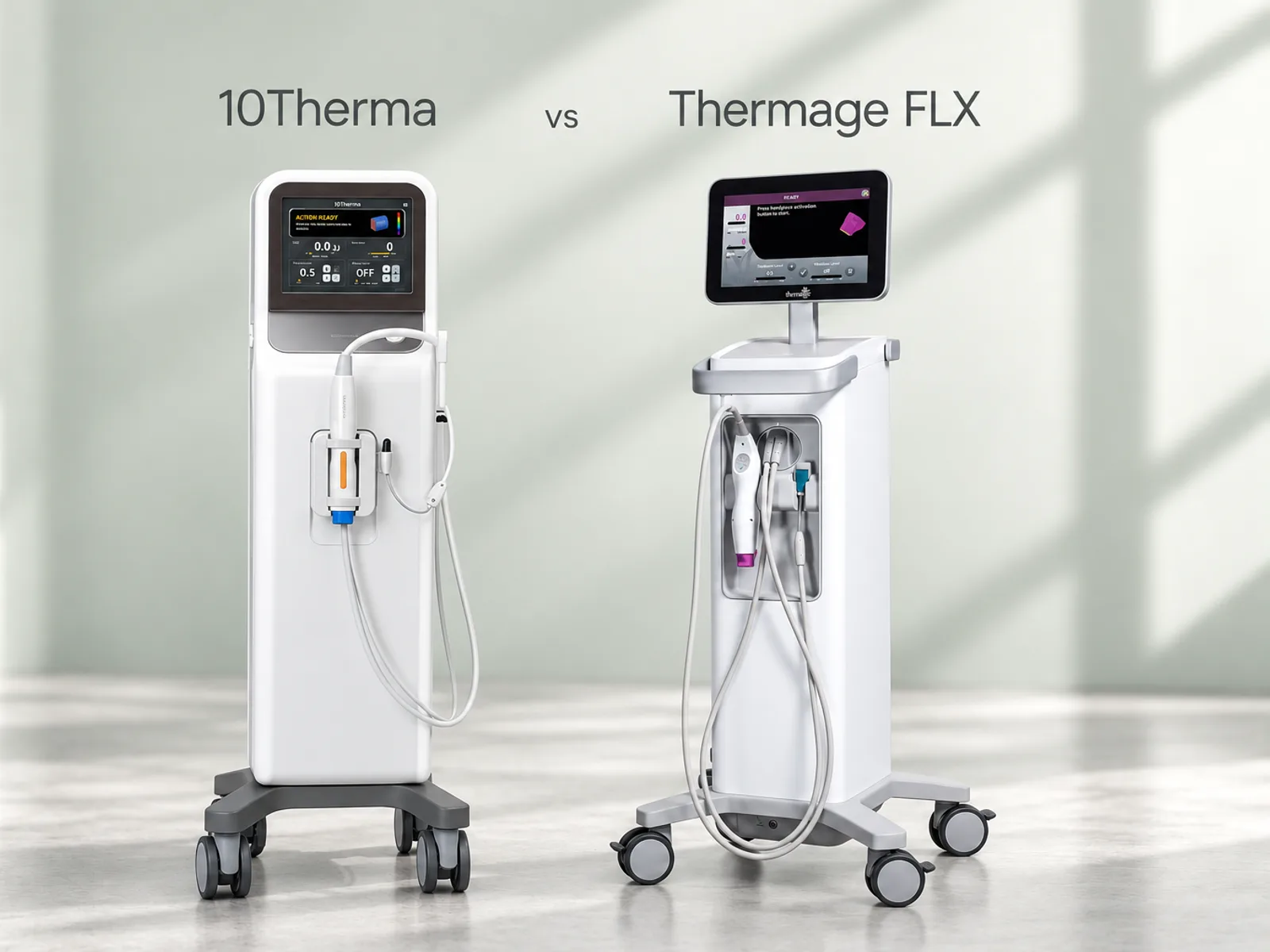
Summary: 10THERMA and Thermage FLX are both lifting treatments that use monopolar radiofrequency to deliver heat to the dermis. How they deliver heat, discomfort, treatment time, and the skin concerns they suit are nearly the same, while cooling tends to be slightly stronger with 10THERMA. In practice, cost is often the deciding factor.
Written by: Lee Ji-seung, Medical Director (Korean Medicine Doctor, PhD in Eastern and Western Medicine) · Date: 2026.10.9
Hello, I’m Lee Ji-seung, Medical Director of Medical Bloom Korean Medicine Clinic · COEX.
During lifting consultations, I’m often asked, "Should I get 10THERMA or Thermage?" To answer directly, the two devices work on the same principle, so the differences are not substantial.
How Does Radiofrequency Lifting Improve Firmness?
Radiofrequency passes electrical energy through the skin to generate heat in the dermis. The heated collagen contracts immediately, and new collagen forms over the following months (individual results vary). This is why radiofrequency lifting is used to tighten the skin overall and reduce fine lines.
Thermage is a representative device using this approach. In 2002, it received US FDA clearance through the 510(k) pathway for treating wrinkles around the eyes. 10THERMA uses the same monopolar radiofrequency approach.
Comparing 10THERMA and Thermage FLX, Point by Point
- Heat delivery — Both use monopolar radiofrequency. There is no difference in the underlying principle.
- Cooling — Both protect the skin’s surface with cooling gas, or a cooling spray. 10THERMA releases more gas, so its cooling may feel slightly stronger.
- Discomfort — Similar. Discomfort varies more with the energy intensity than with the device.
- Treatment time — Similar when the number of shots is the same.
- Suitable skin concerns — Similar because the underlying principle is the same. Both suit people concerned about fine lines, skin texture, and overall firmness.
So, How Do You Choose?
Because the differences between the two devices are not substantial, I guide patients based on cost. If you want Thermage, the original device, I recommend Thermage FLX. If you would like treatment based on the same principle at a lower cost, I recommend 10THERMA. With either option, energy settings and shot distribution tailored to your skin condition have more influence on the result than the device’s name.
Recovery and Timing of the Next Treatment
With radiofrequency lifting, most people experience mild redness on the day of treatment that soon settles, allowing them to return to their usual activities right away. However, on the day of treatment, avoid activities that heat up the face, such as saunas or strenuous exercise. Because collagen takes time to form, changes develop over several months.
An interval of 6 months is ideal for the next treatment, and I recommend having treatment at least once a year.
Frequently Asked Questions
Q. Do I Need Both Thermage and 10THERMA?
There is no need. The two devices work on the same principle, so receiving both means spending on overlapping treatments. It is better to choose one and continue consistently at intervals of 6 months to 1 year.
Q. Which One Is Less Painful?
They are similar. Discomfort varies more with energy intensity, the area treated, and individual sensitivity than with the device. If you are concerned, we adjust the intensity as we proceed.
Q. How Are They Different from Ultherapy?
Ultherapy uses ultrasound to deliver heat at discrete points down to the fascial layer, while radiofrequency lifting spreads heat across an area within the dermis. For sagging, we consider Ultherapy first; for skin texture and firmness, we consider radiofrequency first.
The two are sometimes performed together on the same day, an approach called layered lifting. Both stimulate collagen using thermal energy, so delivering heat to different depths together may offer a synergistic effect (individual results vary).
Temporary redness, swelling, warmth, or soreness may occur after treatment, and results and side effects can vary from person to person. Please consult thoroughly with your clinician before undergoing a procedure.
At Medical Bloom Korean Medicine Clinic · COEX, we consider both your skin condition and your goals to recommend the appropriate device between 10THERMA and Thermage. If you have had previous lifting treatments, please feel free to discuss them with us as well. Medical Bloom Korean Medicine Clinic · COEX is a 4-minute walk from Seolleung Station exits 9·10.
You can also find a more detailed discussion of the comparison points to check when choosing between 10THERMA and Thermage on our Naver blog.
Naver Blog — 2 Points to Compare Between 10THERMA and Thermage: https://blog.naver.com/dish_6083/224435784820
References
- US FDA 510(k) K021402, ThermaCool TC System (Thermage, Inc.), 2002
* This article is for medical information purposes. Results and recovery vary by individual; an in-clinic consultation is required for an accurate diagnosis and treatment plan.